
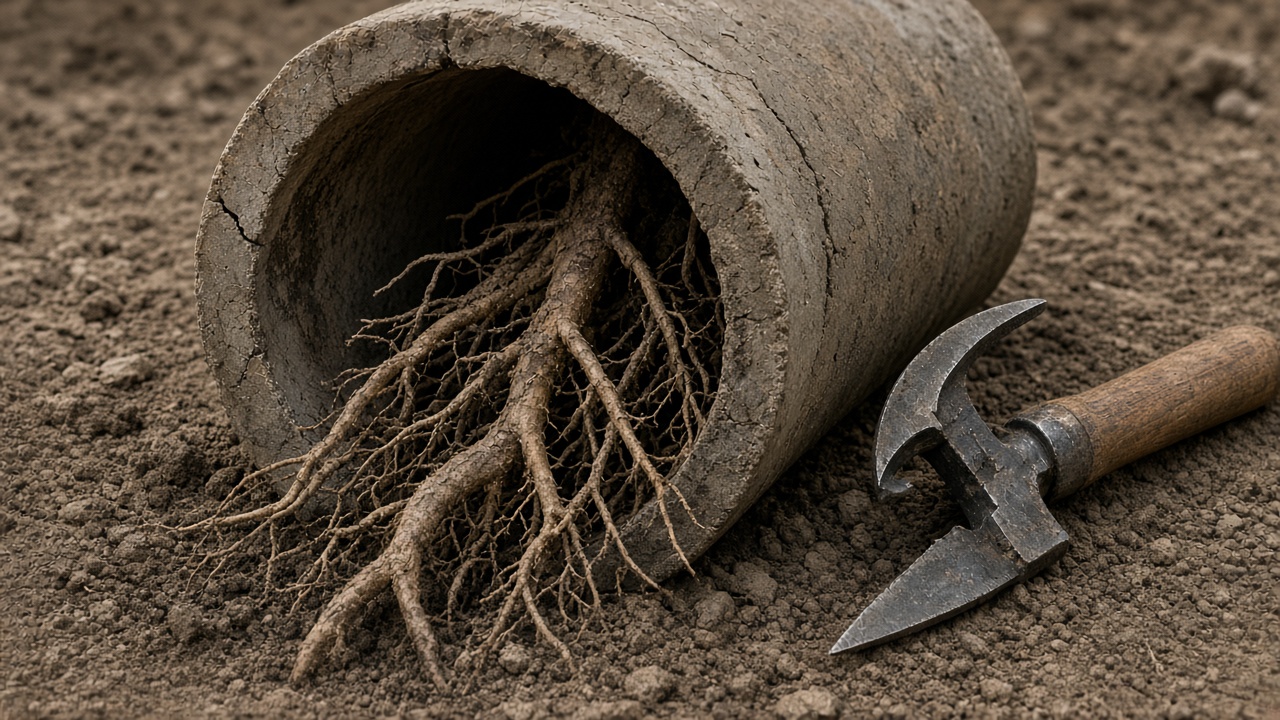
Roots do not set out to damage pipes. They grow toward water, oxygen and nutrients, and a sewer line carries all three. A crack the width of a hair, or a joint that has loosened slightly, is enough of an opening. Once a root fiber gets in, it thickens inside the pipe, traps paper and grease, and the line starts to clog. This page explains what root intrusion looks like, how it is cleared and what keeps it from coming straight back.
How roots get into a sewer line
Healthy pipe is sealed, so roots usually depend on a defect. Common entry points include:
- Joints between pipe sections. Older clay and concrete pipes are made in short lengths with joints that can shift or loosen.
- Cracks. Ground movement, loads above the pipe or age can cause small cracks.
- Poorly fitted connections. Where a branch joins the main, or where a repair meets old pipe.
- Damaged or missing cleanout caps and broken vent connections.
The process is gradual. Fine fibers enter first, then grow in thickness and branch inside the pipe. Over months or years they can narrow the line to a trickle. That is why a root-related clog often begins as an occasional slow drain, becomes more frequent, and eventually leads to a backup.
Which roots cause trouble in Southwest Florida
Local landscaping includes many species. Fast-growing shade trees, ficus and some palms and shrubs can all send roots toward a sewer line. We cannot say which tree in your yard is responsible: roots can travel a surprising distance, and a camera is the only way to see what is in the pipe. A neighbor's tree may be the source. If you are planting or removing a tree near the line, it is reasonable to ask the provider or a landscaper about the distance to keep.
Signs of roots in the line
- Repeated main line clogs, often in the same place
- Slow drains throughout the house that improve and then slow again
- Gurgling in toilets and drains
- A sewer smell near the cleanout or in the yard
- A very green patch of lawn along the line, which can indicate a leak
- A camera showing hair-like roots or masses of root in the pipe
Several of these also appear with other problems, including grease and sagging pipe. A camera inspection shows whether roots are present, how heavy they are and where they enter.
How roots are removed
Cutting. A drum machine feeds a cable with a cutting head, often bladed or chain-based, through the pipe. As it rotates, it cuts the roots back to the pipe wall. This clears the line quickly, which is why it is the usual first step.
Cleaning. After cutting, debris and fine root material remain. Hydro jetting can wash the line and remove the fibers that would otherwise catch the next clog.
Inspection. A camera pass afterwards confirms the roots are gone and shows where they got in.
Repair. Cutting does not stop regrowth. If roots entered at a defect, they may return until the defect is addressed. Options, which depend on the pipe and where it is, include spot repair, pipe lining and replacement. See sewer line repair.
Root control products. Some providers offer treatments that discourage regrowth in a cleaned line. Whether they suit your pipe, and any rules that apply to products placed in a sewer, are worth asking about. We do not recommend a particular product.
Cutting alone, or a longer-term fix?
A cut-and-clean provides relief. How long it lasts depends on the root species, the defect and the tree's distance from the pipe. In some lines, an annual or periodic cleaning keeps the line working with no further work. In others, regrowth is rapid and a repair is the better investment. A sensible provider tells you what the camera shows and gives you a view on which route suits your line. Ask for the camera footage.
What to expect after the roots are cut
For a day or two after cutting, you may see a little debris or cloudy water as loosened material moves through the line. That is normal if it clears. If drains slow again within days, tell the provider, because it may mean pieces of root or other material are lodged further along. Over the next few months, keep an eye on the drains, especially the lowest one in the house. A drain that gurgles or slows after a quiet period is an early signal worth acting on. Keeping a note of the date of each visit helps a provider judge how fast the roots are returning and whether a repair would be a better use of money than repeated cutting.
Questions to ask a provider
- Can you show me the roots on camera?
- Where are they entering the pipe, and how far from the house?
- What equipment do you use to remove them?
- Is cleaning after cutting included?
- How long do you expect it to last, and what would you recommend next?
- If a repair is suggested, can I see the footage and get a written quote?
What affects the price
The provider sets the price. For root work the main factors are the length of the line affected, the density of the roots, the access to the pipe, whether a camera inspection and jetting are included and the time of day. A heavy root mass takes longer to cut than a light one. The cost page lists the factors and questions for comparing quotes.
Who is responsible for the roots?
Roots on private property are generally dealt with as a maintenance matter by the property owner for the part of the line that serves the property. Where a tree belongs to a neighbor or to a public area, responsibility can be less clear. If the line you are worried about is a shared or public one, contact your utility, and tell your provider what you have learned.
Serving Bonita Springs and nearby towns
This page is written for Bonita Springs ZIP codes 34133, 34134, 34135 and 34136. Calls from Estero, Naples, Fort Myers, Cape Coral, Lehigh Acres and North Fort Myers can be connected too.
Call now and mention that you suspect roots.
Ready to deal with roots?
Call now. Your call is connected to an independent local service provider who can talk through the options.